Finding fresh food in Tampa is not an easy task. People selling fresh produce in many of the local farmer's markets typically buy their produce from the same vendors as the grocery stores and set up shop in the markets. First thing in the morning on Saturday, it may be fresher than what you might find in the grocery stores but basically it is the same thing.
Tampa does have it's own CSA.
Sweetwater Organic Community Farm sells half-memberships starting at $479 a year- payable up front- if you can get a membership- this year's are sold out. Even if you could come up with hundreds of dollars for a share- to me the variety doesn't seem to be all that great. You also have to come to pick up your food in a 4 hour window on Sunday afternoon. Volunteering is a requirement but one that I would enjoy.
Then there is the Urban Oasis Hydroponic Farm. This is a farm built on a parking lot. It is all hydroponic and vertical- which is about the only way to go with the cost of land in Tampa. They are more of a commercial operation. They sell both year round and three 8-week seasonal memberships, so getting started is easier. They also sell a hydroponic system for $500- can grow 90 plants in a 1' by 20' area. Of course my back porch is 8 by 14- but you have to be able to open and close two doors- so have two 3 by 8 growing areas- so the volume is possible but not the configuration. Have thought about buying a short membership to try it out but the romance of a garden is a little lacking if the whole garden is covered in concrete!
Just found a new link on the CSA site- not there when I started writing this post- Cheyennes Country Things. They sell $70 memberships for 4 weeks-more my speed. They also have a variety of growing systems and help people start their own gardens. Will check this out and do a better post later. This is technically not in Tampa- but this is closer to me than some of the other places- and it has a delivery service.
Ironically, I found a very exciting farmer's market by doing a search for Christmas Tree Farms. Somehow or other found myself at the Tampa Bay Farmer's Market. I am planning to visit this place ASAP. It is open 7 days a week during the day (close enough and open early enough that I can go without Rob on the weekends. They have a spreadsheet that tells you where the food is grown- but a lot of food is not grown locally. They also have a very interesting vendors list. The vendors list is a post in itself. Found that there is not one but two local coffee roasters: Ybor City Gold and El Molino Coffee. Amy's Fresh Delivery is also something that I would like to check out. One of the hard things about buying local is that the best places are an hour away and times available are inconvenient. Bringing them all together both online and in the store is a really good idea for someone trying to get her feet wet.
That's all for now!
Tuesday, November 8, 2011

Monday, November 7, 2011
Three sisters: Sprouting Day 1
 |
| Mary Rose's Garden Three Sisters 11-6-11 |
The rest of my garden:
 |
| Mary Rose's Garden Basil 11-6-11 |
 | |
| Mary Rose's Garden Chives 11-6-11 |
 |
| Mary Rose's Garden Mint 11-6-11 |
 |
| Mary Rose's Garden Parsley 11-6-11 |
 |
| Mary Rose's Garden Dill 11-6-11 |
 |
| Mary Rose's Garden Cilantro 11-6-11 |
 |
| Mary Rose's Garden Rosemary |
Saturday, November 5, 2011
Pumpkin seeds
Today is the day that I sacrificed my Halloween pumpkin for pumpkin pie.
 If I was connected to the land, I would first plant seeds (planted them a week ago- no sprouts yet- hope for pumpkins in the spring!).
Then the plants would grow and blossom.
Here is a close-up of a plant growing in the field (photo found here):

A field of pumpkins near harvest:
And here is where mine ended up before the sacrifice! Doesn't it look like a preparation for a sacrifice!

The preparation:

The cutting:
 The scooped goods before cleaning:

After cleaning and draining:
 Melt a little butter
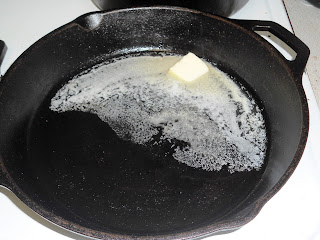
Throw in the seeds
 Add a little salt and stir until well coated with butter- don't need to brown:
 Remove from pan, and spread out on a baking sheet. Don't use a grill pan like me. Envisioned these great grill marks on the seeds- instead just had a pain removing them from the pan.

Bake in a 350 degree oven for about 10 minutes-unless you are using a cast iron baking sheet- then you need 15 minutes to heat up the grill pan. They look like this when done:
 This is the finished product draining on paper towels:

While I am doing this, I am also baking the pumpkin for pies later- but that is a story for another day...
After this stage, I let them sit on the counter until the pumpkin was done cooking- by that time they were soggy. Put them back in the oven and promptly forgot about them for another 15 minutes when they looked like this:
 They are not burnt, they are plenty crispy, but to me they are overdone. You may want to check yours every 5 minutes until they are crispy again but still have some life in them! This blog at this stage will then not be an expert's blog but an experimenter's blog- someone who was once close to nature but moved away about 45 years ago and is just rediscovering it.
Maybe this is a more interesting approach than being an expert! However, when I like a recipe, I'll make a printable version!
Happy Saturday!

Then the plants would grow and blossom.
 | |
| Pumpkin growing: link to photo information |

Here is a close-up of a plant growing in the field (photo found here):

A field of pumpkins near harvest:
 | |
| Pumpkin field in Oregon |

And here is where mine ended up before the sacrifice! Doesn't it look like a preparation for a sacrifice!
The preparation:


After cleaning and draining:


Throw in the seeds


Bake in a 350 degree oven for about 10 minutes-unless you are using a cast iron baking sheet- then you need 15 minutes to heat up the grill pan. They look like this when done:


While I am doing this, I am also baking the pumpkin for pies later- but that is a story for another day...
After this stage, I let them sit on the counter until the pumpkin was done cooking- by that time they were soggy. Put them back in the oven and promptly forgot about them for another 15 minutes when they looked like this:

Maybe this is a more interesting approach than being an expert! However, when I like a recipe, I'll make a printable version!
Happy Saturday!
Friday, November 4, 2011
History of Pumpkin Pie
Both Mom and Dad's family's traditional Thanksgiving menus and recipes were virtually identical. Ancestors of both families came to Barnstable on Cape Cod in the early 17th century, both familes ended up in Salem MA by the time of the witch trials. The brother of one of Mom's ancestors was arrested on witch craft charges but escaped in the middle of the night being last seen heading out of town on the Boston Post Road. The next record is Mom's ancestor in the Oxford, New Haven CT region. Dad's ancestors also went to Salem where one was arrested, tried, and convicted of witch craft. That part of the family then went into the wilds of Massachusetts where the revolutionary war veterans were given land as payment for their service until the lands were annexed by New Hampshire. So I suppose that the reason that the recipes were so similar was because they came from those Barnstable roots- but it evolved with food so that while holding true to customs and tastes, the ingredients went with the times.
Pumpkin pie for us growing up was the recipe on the back of the Libby's can. That recipe originated in 1950 and it is not that connected to the land. One year for a thanksgiving dinner, I made a pumpkin pie with real pumpkin. From that point on, it is a rare thanksgiving that I will use the canned pumpkin. As I am starting on this journey to get connected, I was curious to see the origins of pumpkin pie.
The Pilgrims did not make pumpkin pie- they didn't have ovens that would make the crust. However, they did have a dish where the pumpkin was added to a pot and slow cooked all day long until it was stew-like and doctored to taste like baked apples. From that point, there was a lot of experimentation until we got to a pie somewhat like the current pie in about 1796.
Here are some links to 19th century recipes used in America:
Favorite Dishes 1893
New England Economical Housekeeper 1845
White House Cookbook 1847
Complete Cookbook 1864 and the second page here.
All these recipes used ground spices although some used freshly grated nutmeg. This year, I have been experimenting with whole spices in teas, so think that I will create a recipe that considers history and simmers the pumpkin in whole spices until the flavor is imparted to the pumpkin. I'll use cream instead of evaporated milk and try to stay true to the flavor of the Libby's and see what I get.
 Here is the beginning. To make pumkin pie, start with a pumpkin.
Although the truth is that all pumpkins start from seeds.

Pumpkin pie for us growing up was the recipe on the back of the Libby's can. That recipe originated in 1950 and it is not that connected to the land. One year for a thanksgiving dinner, I made a pumpkin pie with real pumpkin. From that point on, it is a rare thanksgiving that I will use the canned pumpkin. As I am starting on this journey to get connected, I was curious to see the origins of pumpkin pie.
The Pilgrims did not make pumpkin pie- they didn't have ovens that would make the crust. However, they did have a dish where the pumpkin was added to a pot and slow cooked all day long until it was stew-like and doctored to taste like baked apples. From that point, there was a lot of experimentation until we got to a pie somewhat like the current pie in about 1796.
Here are some links to 19th century recipes used in America:
Favorite Dishes 1893
New England Economical Housekeeper 1845
White House Cookbook 1847
Complete Cookbook 1864 and the second page here.
All these recipes used ground spices although some used freshly grated nutmeg. This year, I have been experimenting with whole spices in teas, so think that I will create a recipe that considers history and simmers the pumpkin in whole spices until the flavor is imparted to the pumpkin. I'll use cream instead of evaporated milk and try to stay true to the flavor of the Libby's and see what I get.

Although the truth is that all pumpkins start from seeds.

Thursday, November 3, 2011
Where Coffee Comes From

In the 1970's, strains of coffee were developed which did not need to grow in the shade. When this happened, forests were cut down, plantations were built, and much of the traditional work was done by machines.
There are several labels or certifications applied to coffee.
Bird-friendly coffee is coffee that is grown in the forests or under shade trees.
Organic is coffee that is produced without chemicals and artificial fertilizers.
Fair trade coffee is coffee that ensures that the growers that produce the coffee are paid a living wage for their beans.
There are also certifications that indicate how large the carbon footprint of the coffee is.
According to their website, Grounds For Change is the first carbon-free coffee which means that all the steps combined in producing the final roasted coffee have a net carbon footprint of 0. Grounds for change roasts the coffee when it is ordered.
People can also buy green beans for coffee over the internet (be sure to look for fair trade, organic, and bird-friendly). Coffee can be roasted in expensive home roasters that mechanize everything or can be roasted in a frying pan over the stove. Think that the whole process of home roasting may be an adventure that we will explore someday in later posts.
Have a great day!
Wednesday, November 2, 2011
The Mary Rose's Garden Brand
I'm reading Trump and Kiyosaki's Midas Touch, which is not as much about making money as it is about succeeding in life. I realized that no matter how hard I am pressured to do anything else, that I need to blog everyday to build a brand and to establish my identity- more for myself than for anyone else. In thinking about my brand, I realize that many of the things that I abandoned from my childhood are things that are being rediscovered and revalued. Food that goes from the land and the sea to your mouth in less than a day or a week tastes better than food that is picked unripe and then sits in cold storage for a month or more. That the discipline of self-esteem is not simply being the way God made you to be, but recognizing the value in the way that God made everything and the value in the simple, the natural, and the organic. Spices need to be freshly ground. Herbs need to come straight from the garden. Milk needs to come from a cow- and preferably a cow that you know. Beer is better if it is brewed in the same place where you drink it. Floral is better if you arrange it yourself- the more natural the construction methods the better. Furniture is better if it is hand-crafted by a person with pride in their work. Plastic is toxic. Silk is to wear. Natural fibers are better.
Craftmanship is important (blogger made me do a spell check on craftmanship- not because it was spelled wrong- maybe because it is a low use word). It is important to know who made your clothes and your shoes- who made your furniture- who created that recipe- who brewed your beer- who is the vintner for your wine- who grew the food you are eating. It is important to know them, their character, and their methods for making. growing, and preparing the things that you use and that you consume. It is important to use things that are locally made, locally grown, locally prepared- things that are organic- things that have inherent quality.
Overcoming is important. It is important that every person finds their unique gift to the world and that are allowed to express that gift in the fullest sense possible. No one should ever settle with life for a penny. That means that people that work for you should feel that their job is an expression of a gift that they have- that they are paid sufficiently to enjoy their life and to enjoy time with their family and friends.
Connection is important. We live in a world where it is possible for coffee to be grown thousands of miles away- and for you to encounter that farmer on-line- see their picture- and read their story. It is possible to see who picked it- who roasted it- who brewed it- in an instant no matter where you are in the world. Maybe the world would be a better place if all those people involved in our lives, all those people playing a role in the garden of our lives, were people who were known and who are real to us.
In writing this, I am discovering this- a truly amazing process.
Craftmanship is important (blogger made me do a spell check on craftmanship- not because it was spelled wrong- maybe because it is a low use word). It is important to know who made your clothes and your shoes- who made your furniture- who created that recipe- who brewed your beer- who is the vintner for your wine- who grew the food you are eating. It is important to know them, their character, and their methods for making. growing, and preparing the things that you use and that you consume. It is important to use things that are locally made, locally grown, locally prepared- things that are organic- things that have inherent quality.
Overcoming is important. It is important that every person finds their unique gift to the world and that are allowed to express that gift in the fullest sense possible. No one should ever settle with life for a penny. That means that people that work for you should feel that their job is an expression of a gift that they have- that they are paid sufficiently to enjoy their life and to enjoy time with their family and friends.
Connection is important. We live in a world where it is possible for coffee to be grown thousands of miles away- and for you to encounter that farmer on-line- see their picture- and read their story. It is possible to see who picked it- who roasted it- who brewed it- in an instant no matter where you are in the world. Maybe the world would be a better place if all those people involved in our lives, all those people playing a role in the garden of our lives, were people who were known and who are real to us.
In writing this, I am discovering this- a truly amazing process.
Tuesday, November 1, 2011
Decorating with Nature
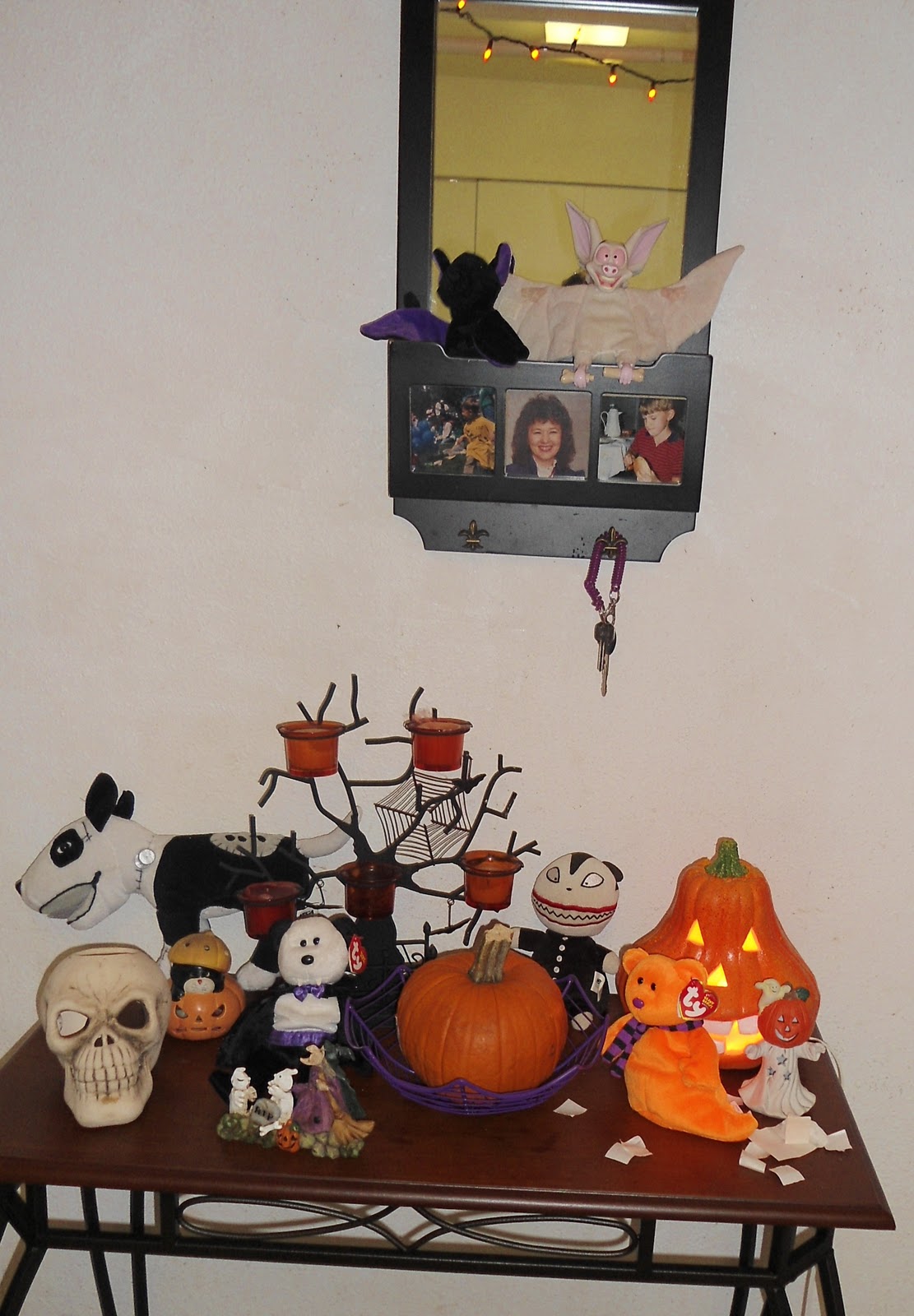
Every year, we close off the front hallway and create a Halloween scene. It is VERY scary. This year, I did exactly the same thing with the same decorations and it was not scary at all. My son pointed out that everything in the scene was friendly and had happy smiles. What is the difference? We did not have a Jack-o-lantern- we bought our pumpkin too early, it rotted out, and I just did not feel like getting another. This has really hit home on how much every season is enhanced when we bring nature into the home.
When I was twelve, we visited Liebler Farms in Glastonbury during the Christmas season. This was run by my uncles and grandfather. I'll always remember it. Ever since that visit, I've always wanted a Christmas store. I used to think of that store in terms of the decorations I could buy to stick in it, but today I'm realizing that the real value of the Liebler Farms Christmas store was in all the natural materials- because it wasn't just a Christmas store, it was a Christmas tree store too- and they also ran a Christmas decoration business. I remember my uncle showing me how to make Christmas wreaths and garlands- they never used a wire form- they used the very simple things- living material, cotton or velvet ribbon, florist wire, and wooden picks. He lovingly wrapped the wire around each piece- building a vision with each inch of wire unwrapped and incorporated. I was surprised that when my uncle Frank died, the thing that he was remembered for the most was his beautiful Christmas wreaths. It would be nice to have a legacy like that.
I decorate a lot for Christmas and even use natural and living materials- but think that this year- we're going to remember the value of bringing the natural into the home.
When I was twelve, we visited Liebler Farms in Glastonbury during the Christmas season. This was run by my uncles and grandfather. I'll always remember it. Ever since that visit, I've always wanted a Christmas store. I used to think of that store in terms of the decorations I could buy to stick in it, but today I'm realizing that the real value of the Liebler Farms Christmas store was in all the natural materials- because it wasn't just a Christmas store, it was a Christmas tree store too- and they also ran a Christmas decoration business. I remember my uncle showing me how to make Christmas wreaths and garlands- they never used a wire form- they used the very simple things- living material, cotton or velvet ribbon, florist wire, and wooden picks. He lovingly wrapped the wire around each piece- building a vision with each inch of wire unwrapped and incorporated. I was surprised that when my uncle Frank died, the thing that he was remembered for the most was his beautiful Christmas wreaths. It would be nice to have a legacy like that.
I decorate a lot for Christmas and even use natural and living materials- but think that this year- we're going to remember the value of bringing the natural into the home.
Subscribe to:
Posts (Atom)
-
 Yesterday, I used coffee as an example of how we can become more connected with our food. That set me on quest to see how my morning cup...
 -
Before my son was born, I could eat anything I wanted in the whole world and never gain an ounce. In fact, my whole pregnancy, my weight wa...
-
 This is my new favorite way to enjoy warer! Was introduced to the combination of throwing cucumber, lemon slices, and mint into water ...